.png)

MAT is backed by strong evidence and has helped countless individuals stabilize, rebuild their lives, and sustain long term recovery. For many people, it provides a practical and proven path forward.


.svg)
My experience has been life altering! The employees that are trusted with peoples lives and tasked with its restoration, do so with love and compassion.
- JG


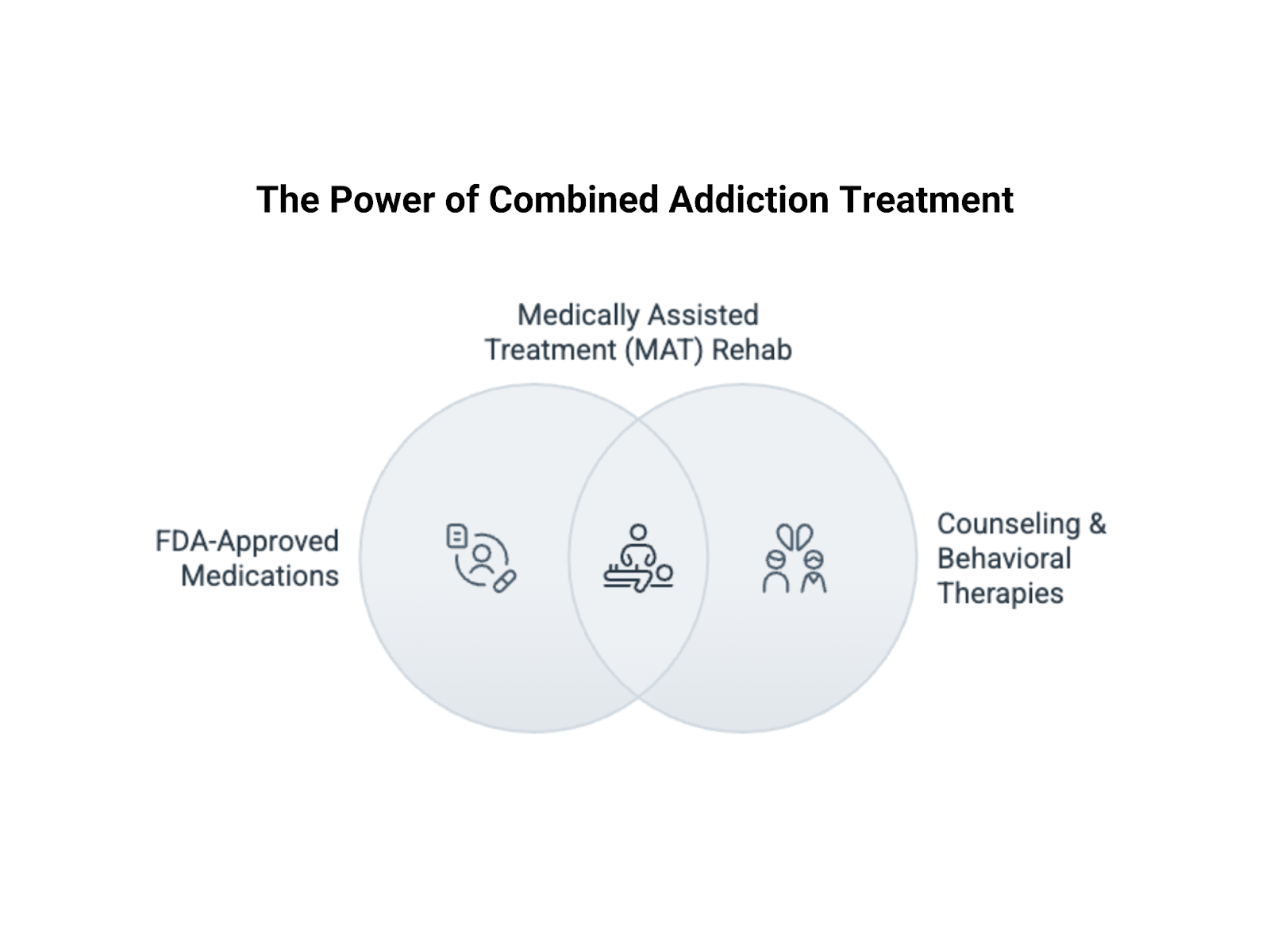
Medication Assisted Treatment, or MAT, combines FDA approved medications with counseling and behavioral therapies to treat substance use disorders, particularly opioid and alcohol addiction. Traditional treatment models often relied heavily on willpower, but MAT recognizes a more complete reality. Addiction changes the brain, and those changes do not disappear overnight. Medical support is often necessary to stabilize the body before deeper recovery work can take hold.
MAT is not about replacing one drug with another, despite the common myth. It involves carefully prescribed medications provided under medical supervision, with physicians monitoring progress and adjusting doses based on individual response and safety. When medication is combined with counseling and structured behavioral support, outcomes improve significantly compared to either approach alone. The goal is stability, safety, and sustainable long term recovery, not substitution.
MAT works by stabilizing brain chemistry, reducing physical cravings, and easing withdrawal symptoms that often derail recovery before it truly begins. Drugs and alcohol disrupt the brain’s reward system and create physical dependence that can remain intense even after you decide to stop. MAT medications are designed to address those changes directly by restoring more normal brain function, lowering cravings, and softening the impact of withdrawal.
When the physical instability settles, you are better able to focus on the deeper work of recovery. You can participate fully in therapy, develop healthier coping skills, and begin addressing the underlying issues that contributed to substance use. MAT creates a stable foundation from which meaningful and lasting change can grow.
MAT programs follow a structured and intentional path that includes assessment, induction, stabilization, and long term maintenance. Each phase serves a specific purpose in building sustainable recovery.
Treatment begins with a comprehensive assessment. Physicians evaluate your substance use history, physical health, mental health, and life circumstances to develop an individualized care plan. During induction, medication is introduced under close medical supervision so clinicians can determine the appropriate dose while monitoring safety. Proper timing and dosing during this stage are critical to prevent complications.
Stabilization follows as your body adjusts to the medication. Cravings decrease, withdrawal symptoms ease, and you begin consistent counseling and supportive services. Maintenance is the longer term phase, during which medication continues alongside therapy and relapse prevention work. Some individuals remain on MAT for months, others for years, and some benefit from ongoing medication indefinitely. The length of treatment is guided by stability and progress, not stigma.
MAT is an evidence based approach to addiction treatment that combines FDA approved medications such as methadone, buprenorphine, and naltrexone with counseling and behavioral therapy. This integrated model treats addiction as both a medical and behavioral condition rather than addressing only one side of the problem.
Addiction affects the brain and body physically, while also reinforcing patterns of behavior that sustain substance use. Medication stabilizes the biological component, while counseling addresses thoughts, triggers, habits, and emotional drivers. Together, they provide comprehensive care.
Medical oversight is not optional in legitimate MAT programs. Physicians monitor side effects, adjust dosing, coordinate care, and ensure treatment evolves as your needs change. Ongoing supervision includes drug screening, mental health evaluation, and physical health monitoring. This level of clinical involvement distinguishes structured MAT programs from unsupervised medication use and ensures patients receive safe, coordinated, and effective treatment.
Recovery through MAT follows a clear and structured process. It begins with a comprehensive assessment, during which physicians review your substance use history, physical health, mental health, and overall life circumstances to develop a treatment plan tailored to your needs.
Induction follows, introducing medication under close medical supervision. During this phase, your care team determines the appropriate dose while carefully monitoring your safety and response to treatment. This step is critical to ensuring a stable and effective start.
As stabilization occurs, your body adjusts to the medication, cravings decrease, and withdrawal symptoms subside. With improved physical stability, you engage more consistently in counseling and begin addressing the deeper emotional and behavioral aspects of recovery.
Maintenance supports long term progress by combining ongoing medication with therapy and relapse prevention planning. Some individuals remain on MAT for months, others for years, and some benefit from continuing treatment indefinitely. The appropriate length of care is determined by stability, safety, and sustained progress, not by arbitrary timelines or stigma.





.png)
.png)


