.png)

Medication assisted treatment is also used to support recovery from alcohol addiction. The goal is to reduce the urges that often return after detox and lead to relapse. Once the body is stabilized, certain medications can help suppress cravings and lower the risk of returning to drinking.
Alcohol changes the brain in many of the same ways opioids do, and those changes can persist long after someone stops drinking. Traditional alcohol rehab has long focused on counseling, behavioral therapy, and peer support, and those elements remain essential. However, adding FDA approved medications provides an additional layer of support by addressing the biological side of dependence. These medications can reduce alcohol’s rewarding effects, decrease cravings, and in some cases create unpleasant reactions if alcohol is consumed. Together, this medical support strengthens the progress made in therapy and recovery work.
MAT for alcohol is an evidence-based approach. It combines FDA-approved medications with counseling to treat Alcohol Use Disorder. Each medication works differently.
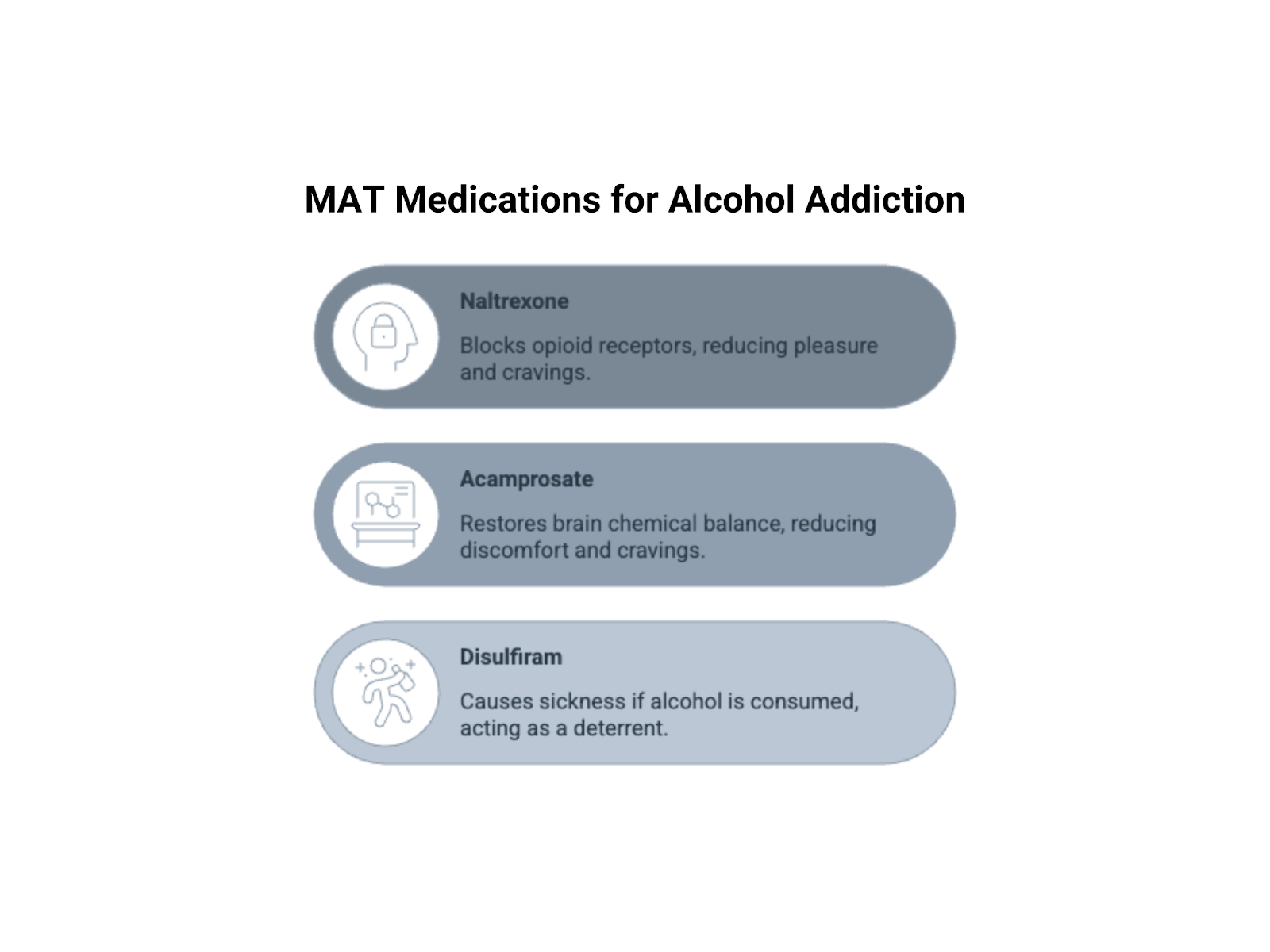
Naltrexone blocks opioid receptors in the brain, which play a role in alcohol’s rewarding effects. When drinking becomes less pleasurable, cravings often decrease and the risk of relapse is reduced. It is available as a daily oral tablet or as a monthly injection, and both forms have been shown to be effective when taken as prescribed.
Acamprosate (Campral) helps restore balance to brain chemicals that are disrupted by chronic alcohol use. By stabilizing these systems, it can reduce the psychological discomfort that often shows up in early recovery, including anxiety, restlessness, and persistent cravings.
It is particularly helpful for managing protracted withdrawal symptoms, which can last for months after someone stops drinking. Acamprosate is typically started after detox and works best when combined with counseling and structured recovery support.
Antabuse (disulfiram) makes you physically ill if you drink alcohol, causing symptoms such as nausea, vomiting, headaches, flushing, and other uncomfortable reactions. It works as a deterrent rather than by reducing cravings, which means it is most effective for people with strong motivation to remain abstinent.
It must be taken consistently, and you have to avoid all sources of alcohol, including certain foods, sauces, and some medications that contain alcohol. Choosing the right medication depends on several factors, including your drinking patterns, whether your goal is complete abstinence or reduced drinking, your medical history, and your personal preferences. Your doctor will help you evaluate these factors and decide which option best supports your recovery.
The first step is reaching out to a certified healthcare provider or addiction treatment center for an assessment. It can feel intimidating, especially if you are unsure what to expect, but understanding the process ahead of time makes it far less overwhelming. The intake assessment is essentially a structured conversation. You will discuss your substance use history, including what you have used, how long it has been going on, any previous treatment attempts, and how addiction has affected your life. Providers will also ask about your physical health, mental health, current medications, and other medical conditions. Everything you share is confidential and used only to develop a safe and effective treatment plan.
Honesty is critical. Your safety and your success depend on accurate information. Providers need a complete picture to prescribe the right medications, prevent harmful interactions, and address both physical and mental health concerns. Addiction treatment professionals are not there to judge you. They are medical providers focused on helping you recover.
Lorem ipsum dolor sit amet consectetur adipiscing eli mattis sit phasellus mollis sit aliquam sit nullam neque ultrices.
.png)