.png)

Your doctor just mentioned two medications, Belbuca and Suboxone. Both have the same ingredient inside. But mixing them up could be dangerous. Belbuca helps chronic pain. Suboxone helps beat opioid addiction. This guide breaks down what makes them different. You'll understand how they work, why your doctor picks one over the other, and which one actually helps your situation.
Both drugs start with buprenorphine, which is a partial opioid agonist. That means it turns on opioid receptors in your brain, but not all the way. You get relief without the full rush that stronger opioids give. Here's where they split. Belbuca has only buprenorphine. Suboxone mixes in naloxone, which blocks opioid effects. That one extra ingredient changes how doctors use them and who gets them.
The FDA approved Belbuca specifically for chronic pain and nothing else. It comes as a small film that sits inside your cheek, where the medication absorbs through the lining of your mouth. Suboxone, on the other hand, was approved only for opioid addiction treatment. It contains naloxone, which discourages misuse by blocking the euphoric effects if someone attempts to crush and inject it. Years of clinical testing supported these approvals, with each medication proving effective for its intended purpose. Because of these distinctions, doctors cannot legally substitute one for the other. They are not interchangeable.
Belbuca is designed for persistent, long term pain that hasn’t responded to other treatments. It’s often prescribed for people whose daily lives have been disrupted for months or even years by ongoing discomfort. The film delivers medication steadily throughout the day, providing consistent relief rather than short bursts of coverage. Suboxone serves a completely different purpose. It’s used to treat opioid addiction by reducing withdrawal symptoms and calming the cravings that can feel overwhelming during recovery. The addition of naloxone helps prevent misuse by blocking euphoric effects if someone attempts to inject the medication. Ultimately, the diagnosis determines the prescription. Chronic pain may warrant Belbuca, while opioid use disorder calls for Suboxone. Although both contain buprenorphine, they are formulated and approved for very different medical needs.
These drugs might look similar on paper. But the differences affect your whole treatment.
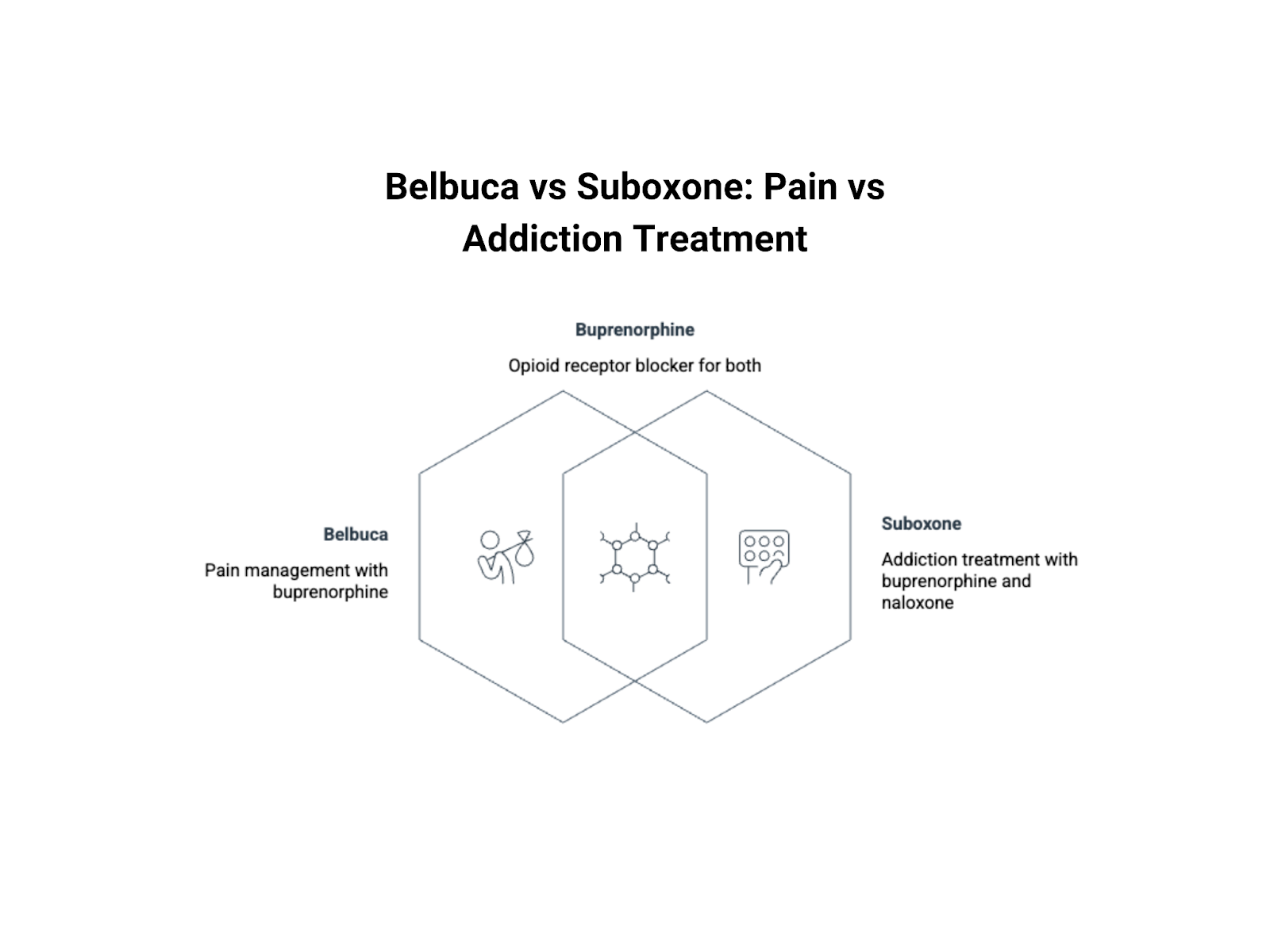
Your doctor prescribes Belbuca when pain runs your life. Pain that's been there so long you forgot what normal feels like. Pain that made every other treatment look like a joke. Suboxone comes in when addiction has you trapped. When you wake up sick every morning until you use. When getting high is the only thing you can think about. Recovery becomes the whole point, not just feeling better.
Belbuca contains only buprenorphine, without any additional ingredients. The film rests inside your cheek, where the medication absorbs through the lining of your mouth to provide steady pain control throughout the day.
Suboxone, by contrast, combines buprenorphine with naloxone. When taken properly under the tongue, the naloxone has minimal effect because it is poorly absorbed that way. However, if someone attempts to crush and inject the medication, the situation changes quickly. The naloxone becomes active and rapidly displaces opioids from the brain’s receptors, triggering immediate withdrawal symptoms. That reaction is the opposite of a high, and it is intentionally designed to discourage misuse. This built-in safeguard is one of the reasons Suboxone is widely used in addiction treatment. The safety mechanism matters.
Chronic pain takes everything from you. Your job. Your relationships. Your hope. Belbuca can help when nothing else touched the pain.
You stick one film inside your cheek twice a day, twelve hours apart. It clings to the wet skin there. Thirty minutes later, it's completely dissolved. Medicine flows straight into your blood through your cheek. Your stomach never sees it. That gives you steadier levels in your blood all day. Your doctor starts you low. Then adjusts up or down based on whether it's working and how the side effects hit you. Most people feel it working within an hour. The relief lasts about twelve hours, which is why you use it twice daily.
Belbuca can carry real risks for someone with a history of addiction. Although buprenorphine is a partial opioid agonist, it still has the potential to create physical dependence. For individuals who have previously struggled with substance use, prescribing it requires careful consideration.
Before writing a prescription, your doctor will take a thorough look at your medical and addiction history. They are weighing whether the benefits of pain relief outweigh the potential risk of relapse. That evaluation is not about judgment. It is about safety. If Belbuca is prescribed in the context of past addiction, you can expect close monitoring. This may include more frequent office visits, medication counts, and routine drug screening. In some cases, a completely different pain management strategy may be more appropriate.
You can't just decide to quit opioids and make it stick. The drugs rewired your brain. Suboxone helps get your brain chemistry closer to normal while you do the real work of recovery.
Medication-assisted treatment means Suboxone plus counseling working together. The buprenorphine fills up enough opioid receptors to stop withdrawal cold and shut down cravings hard. That gives you room to actually heal. You can sit through therapy without feeling like you're dying. You can show up to work. The desperate hunger for drugs stops controlling every minute of your day. The research is clear. People on medication-assisted treatment stick with recovery longer. They relapse way less and they get their lives back more often.
The naloxone stays inactive when Suboxone is used correctly. When the film is dissolved under your tongue, very little naloxone is absorbed into the bloodstream, so the primary effect comes from buprenorphine doing its job. If someone attempts to inject it, however, the situation changes quickly. The naloxone becomes active and rapidly displaces opioids from the receptors in the brain, which can trigger precipitated withdrawal. That reaction can feel intense and immediate, often making a person significantly sicker within minutes.
This design makes injecting Suboxone a very bad idea. It functions as built in protection for treatment programs, particularly for individuals who may still struggle with the temptation to misuse opioids.
Belbuca is not approved for the treatment of addiction, and it was never designed or clinically tested for that purpose. It is indicated specifically for chronic pain management, and its safety and effectiveness were evaluated within that context alone. Using it outside of those approved guidelines would fall outside the scope of how the medication was studied and regulated.
Doctors can legally prescribe medications for unapproved, or off label, uses, and in some cases that approach is reasonable and well supported by evidence. However, using Belbuca to treat opioid addiction is something most addiction specialists avoid. The medication does not contain naloxone, which means it lacks the built in safeguard designed to reduce the risk of misuse. Without that protective component, there is no added barrier against abuse, making it a far less appropriate option in addiction treatment settings.
Suboxone is one of the most widely used and studied medications for opioid addiction. The buprenorphine component reduces withdrawal symptoms and cravings, while the naloxone discourages misuse by blocking euphoric effects if someone attempts to inject it. This combination has been studied in thousands of patients with opioid use disorder, giving physicians clear guidance on dosing, expected side effects, and appropriate monitoring.
The evidence supporting its use continues to grow. Treatment with Suboxone is associated with lower overdose rates, improved stability, and better overall quality of life. For many people, it provides a foundation that makes sustained recovery possible.
Both medications can lead to physical dependence, meaning your body adapts to having them in your system over time. However, their safety profiles and the experience of withdrawal can differ depending on the medication, the dose, and the reason they were prescribed.
Taking Belbuca for months to manage chronic pain can lead to physical dependence, which means stopping it suddenly can trigger withdrawal symptoms. Quitting cold turkey often brings anxiety, sweating, muscle aches, insomnia, nausea, and vomiting, which is why doctors taper the dose gradually to reduce the intensity of those effects.
Suboxone also creates physical dependence, but in addiction treatment that is part of the strategy. The goal is to replace unpredictable, high risk opioid use with a controlled and medically supervised medication that stabilizes the brain and body. This allows you to focus on rebuilding the rest of your life while under clinical care. When it is time to taper, withdrawal from Suboxone is generally milder than withdrawal from heroin or short acting opioid pills because buprenorphine is a partial agonist with a longer duration of action. Even so, coming off Suboxone should be managed by a doctor rather than attempted alone, to ensure safety and minimize discomfort.
Do not switch between Belbuca and Suboxone on your own. Although both contain buprenorphine, they are formulated and dosed very differently, and they are prescribed for completely different medical reasons. Any transition has to be carefully planned by a doctor who calculates equivalent dosing, monitors for breakthrough symptoms, and times the change based on what other opioids may still be in your system
.
If that process is mishandled, you can trigger precipitated withdrawal. Buprenorphine can displace other opioids from brain receptors too quickly, causing an abrupt and intense onset of withdrawal symptoms that may feel far worse than expected. That reaction is not only physically distressing but can also discourage people from continuing treatment. Proper medical supervision is essential to reduce that risk and keep the transition as safe as possible.
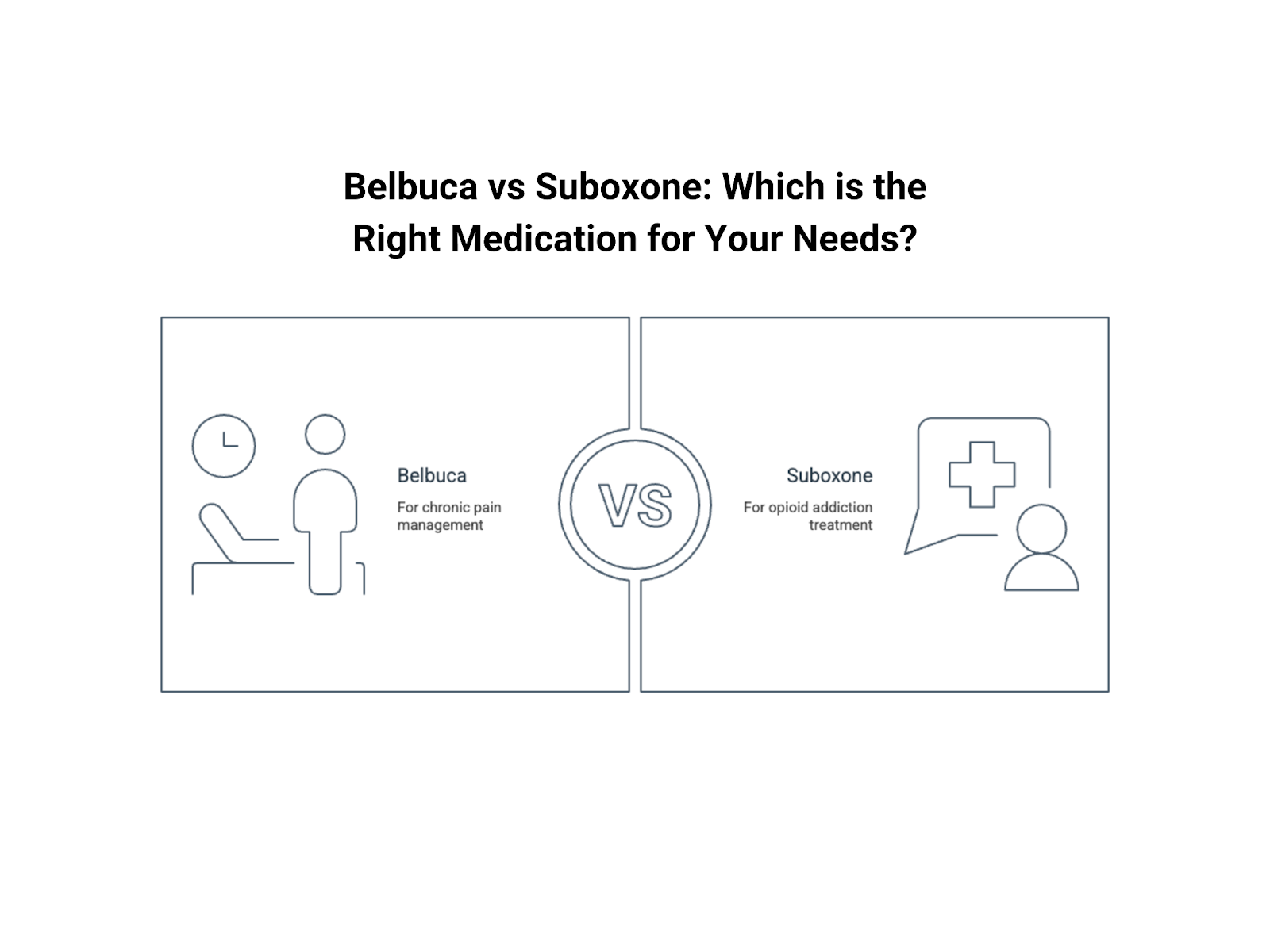
If chronic pain is your primary issue, Belbuca may be an appropriate option. Your doctor will evaluate how severe the pain is, what treatments you have already tried, and whether the potential risks of opioid therapy are justified in your situation. That decision is based on balancing relief with safety. If opioid addiction is disrupting your life, Suboxone is often the more appropriate path. Your treatment team will determine the correct starting dose, monitor your response, connect you with counseling or behavioral support, and develop a plan that addresses more than just the prescription. Effective treatment focuses on long term stability and recovery, not medication alone.
Never take either drug without a doctor watching over you. Both require regular check ins, along with blood tests to make sure your liver is handling the medication properly. In addiction treatment, urine tests are often used to confirm you are taking it as prescribed and not using other substances. You need to tell your doctor about every single thing you are taking because Belbuca and Suboxone can interact badly with many common medications. Benzos like Xanax or Valium, for example, can dangerously slow or even stop your breathing when combined with buprenorphine.
Pay attention to your mental health as well. Both medications can affect your mood, and depression may show up or worsen while anxiety can spike. Your medical team needs to know about any changes so they can adjust your treatment safely. Starting either medication incorrectly can cause precipitated withdrawal, which is a medical emergency. This happens when buprenorphine pushes other opioids off your brain receptors too quickly, making you feel suddenly and intensely sick. It is dangerous, and only doctors trained in this area know the right timing and dosing to prevent it.
Both medications contain buprenorphine, but they are designed to treat very different conditions. Belbuca is prescribed for chronic pain, while Suboxone is used to treat opioid addiction. Knowing that distinction matters, and in some cases it can be life saving. Be completely honest with your doctor about your history with drugs or alcohol and every medication you are currently taking. Do not adjust your dose on your own, share your medication, or stop suddenly without medical guidance. These treatments are effective when they are used correctly and as part of a structured plan.
Belbuca can restore quality of life for people whose daily functioning has been overtaken by pain. Suboxone has helped countless individuals stabilize from opioid addiction that might otherwise have led to overdose or death. You deserve treatment that addresses your actual condition, not trial and error. Getting the right medication, following the full care plan, and staying connected to your medical team can make all the difference.
Lorem ipsum dolor sit amet consectetur adipiscing eli mattis sit phasellus mollis sit aliquam sit nullam neque ultrices.
.png)