.png)

Recovery often begins with medication, sometimes with one option, sometimes another. Both Suboxone and Subutex are effective when taken as prescribed, and both have saved lives. The core difference is simple: Suboxone contains naloxone, and Subutex does not. That single ingredient influences clinical decisions. It affects who receives which medication, when it is prescribed, and why a doctor may choose one over the other. If you are beginning treatment for opioid addiction, understanding that distinction matters, because the choice is not random. It is part of a plan built around your safety and long term recovery.
The FDA approved both medications years ago, and both contain buprenorphine. They treat opioid addiction by reducing the cravings that can feel relentless and by easing withdrawal symptoms so they are manageable rather than overwhelming. That is their purpose: to make stopping possible without the intense discomfort that so often led to relapse in the past.
For years, many people tried to quit opioids through willpower alone, and it rarely led to lasting success. These medications changed the landscape of treatment by giving people a medically supported path forward and a real chance at recovery.
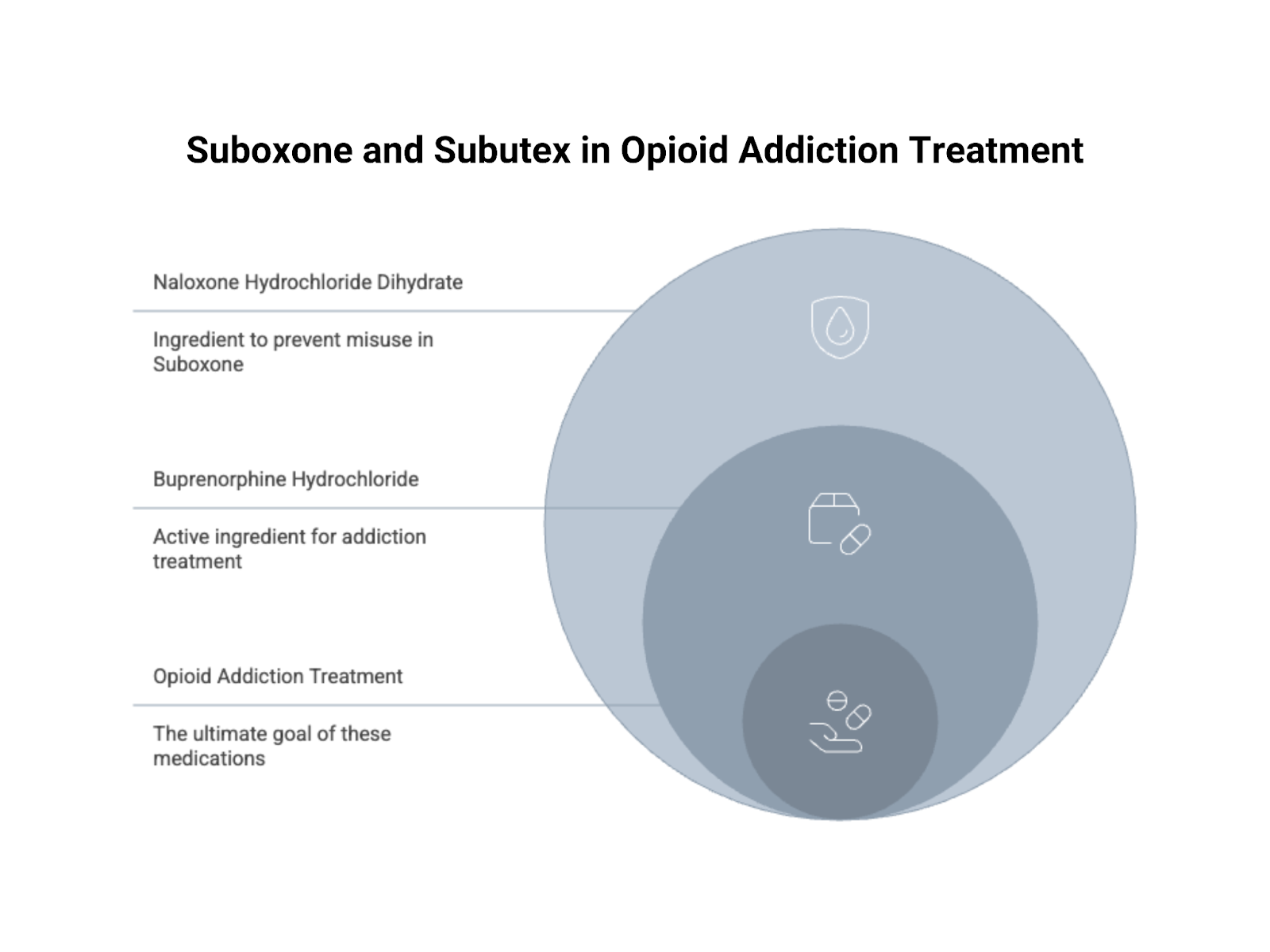
Suboxone contains two active ingredients: buprenorphine hydrochloride, which treats opioid addiction by reducing cravings and withdrawal symptoms, and naloxone hydrochloride dihydrate, which helps deter misuse. Together, they serve two purposes, one supporting your recovery and the other adding a layer of protection.
Subutex contains a single active ingredient, buprenorphine hydrochloride. It does not include naloxone or any built in misuse deterrent, only the treatment component itself. That simplicity defined Subutex when it was first introduced. Over time, however, evolving treatment standards and prescribing practices led to greater use of combination products such as Suboxone, which are now preferred in most situations.
The primary difference between the two medications is the presence of naloxone in Suboxone. Subutex contains only buprenorphine, while Suboxone combines buprenorphine with naloxone. That additional ingredient plays a meaningful role in how clinicians assess safety, risk of misuse, and overall treatment planning.
When Suboxone is taken as prescribed under the tongue, the naloxone remains largely inactive and does not produce a noticeable effect. The buprenorphine performs the therapeutic work by reducing cravings and preventing withdrawal. If the medication is crushed and injected, however, the naloxone becomes active, blocks opioid receptors, and can trigger rapid withdrawal symptoms. This built in response makes Suboxone more resistant to injection misuse.
Subutex has historically been misused more frequently than Suboxone, in part because it does not contain naloxone. Without that safeguard, it may be more appealing for diversion or non medical use. Suboxone’s naloxone component discourages injection by triggering withdrawal if misused in that way, which reduces its desirability for people seeking a euphoric effect. This added protective feature is one reason Suboxone is generally considered the safer option in many treatment settings, both for individual patients and for the broader community.
If you walk into a treatment clinic today, you are more likely to be prescribed Suboxone than Subutex. Prescribing practices have shifted over time because Subutex does not include an abuse deterrent component. While generic buprenorphine is still available and used in certain clinical situations, Suboxone has become the standard option for most patients. Its combination formula adds a layer of protection against misuse, which makes it a safer default choice for long term treatment in many cases.
Medication assisted treatment relies on these medications to control cravings and ease withdrawal symptoms that can otherwise make recovery feel impossible. By stabilizing brain chemistry, they create the space needed to think clearly, engage in therapy, and begin rebuilding the parts of life affected by addiction.
Treatment typically unfolds in stages. It begins with induction, when medication is introduced after withdrawal has started. Symptoms may be uncomfortable at first, but relief often comes quickly once the medication takes effect. This phase usually lasts a few days or weeks and focuses on achieving safe stabilization. After induction comes maintenance, the longer phase of care. During maintenance, you remain on a stable dose for months or even years while working on recovery goals. The medication continues to manage withdrawal and reduce cravings, providing the consistency necessary for long term progress. Depending on clinical judgment and patient needs, either medication may be used during these phases.
Clinicians follow established guidelines when prescribing these medications. In some cases, Subutex may be used briefly during induction, particularly when managing acute withdrawal symptoms. Once stabilization occurs, the treatment plan may transition to Suboxone for ongoing maintenance, reflecting research that supports the added safety of the combination product. Early treatment prioritizes comfort and safety, while long term management emphasizes stability and minimizing misuse risk.
Do these medications work? Yes. The research is clear. Medication assisted treatment improves survival rates, reduces the risk of overdose, and helps people stay engaged in care longer. Patients receiving these medications are more likely to achieve remission compared to those who attempt recovery without support. Behind those statistics are real people. People who stabilized, rebuilt relationships, returned to work, regained custody, restored health. People who survived long enough to rebuild their lives.
Success depends largely on consistency. Taking your medication exactly as prescribed, attending appointments even on the hard days, and following through day after day all play a critical role. The medication reduces cravings and stabilizes your brain chemistry, but your participation is just as important. Even the most effective treatment cannot work without adherence. The medication is designed to help, but it only works if you take it as directed and stay engaged in the process.
Every medication has potential side effects, and these two are no exception. Constipation is common and can become significant enough to require dietary changes or treatment. Headaches may come and go, nausea can make eating difficult, and increased sweating is frequently reported. Some people experience dizziness that affects balance, while others notice changes in sleep patterns. Most patients tolerate these effects and find that they become more manageable over time. For many, the discomfort is an acceptable tradeoff in the context of recovery. However, some individuals struggle and may need dose adjustments, supportive care, or closer monitoring to remain stable and comfortable in treatment.
The side effect profiles of Suboxone and Subutex are nearly identical because both contain buprenorphine. Headaches, nausea, and constipation are among the most frequently reported issues, and some patients benefit from increased hydration, fiber, or additional medical support to manage them. Excessive sweating and insomnia can also occur. In most cases, these symptoms are related to buprenorphine rather than naloxone, and they often improve as the body adjusts.
Subutex carries a higher risk of misuse and diversion compared to Suboxone. Diversion refers to medication being sold or distributed outside legitimate medical use. Because Subutex does not contain naloxone, it may be more appealing for nonmedical use. Suboxone’s combination formula reduces that risk, since injecting it can activate naloxone and trigger withdrawal symptoms. This built in safeguard helps protect patients and the broader community.
Although Suboxone is the standard choice for most patients, there are exceptions. Pregnant individuals may be prescribed Subutex in certain cases, and anyone with a documented naloxone allergy requires an alternative. Some clinicians also use Subutex briefly during the initial induction phase before transitioning patients to Suboxone for long term maintenance.

Pregnancy can complicate medication decisions, and clinicians tend to be especially cautious during this time. Some women remain on Suboxone throughout pregnancy without complications, while others transition to Subutex as a precaution. Research continues to evolve, so treatment plans are individualized based on clinical judgment and risk assessment. If naloxone cannot be tolerated, an alternative is necessary. In certain situations, particularly during early induction, a physician may begin treatment with Subutex and later transition to Suboxone once stability is achieved.
True allergic reactions to naloxone are rare, but they can occur. When a documented allergy exists, Suboxone is not appropriate and Subutex may be required. Early pregnancy may also influence the decision to use Subutex, not because naloxone has been proven harmful, but because minimizing medication exposure during pregnancy is often preferred when clinically reasonable.
For most patients, Suboxone is the preferred option because its abuse deterrent formulation adds an additional layer of protection while remaining just as effective as Subutex in treating opioid use disorder. The therapeutic benefits are comparable, and the presence of naloxone is often the deciding factor. Even so, this choice is never automatic. It should result from a thoughtful discussion between you and your physician, guided by your medical history, current needs, and stage of recovery.
Physicians consider multiple variables when selecting a medication. These include risk of misuse, current phase of treatment, prior response to medication, coexisting medical conditions, other prescribed drugs, and any documented allergies. Effective care requires matching the right medication to the right individual at the right time rather than applying a uniform approach to every patient.
Before beginning either medication, ask direct and practical questions. Confirm whether the medication is appropriate for your situation, review what your treatment plan will look like week by week, and understand how your addiction history influences the decision. Clarify costs, insurance coverage, and how side effects would be managed. Informed questions support informed decisions.
Two primary buprenorphine based medications are used to treat opioid addiction: Suboxone and Subutex. Both target the same condition and rely on the same core ingredient, but the presence or absence of naloxone distinguishes them. Suboxone has become the dominant prescription option because its abuse deterrent design adds protection while maintaining effectiveness. Subutex continues to serve an important role for pregnant patients, individuals with naloxone allergies, and certain clinical scenarios. Recovery is rarely simple. It requires medication, professional guidance, personal commitment, and sustained effort over time. Medication can reduce cravings and ease withdrawal, but rebuilding your life depends on consistent participation, support, and a willingness to engage fully in the process.
Lorem ipsum dolor sit amet consectetur adipiscing eli mattis sit phasellus mollis sit aliquam sit nullam neque ultrices.
.png)