.png)

Most workplace drug screens do not include buprenorphine because employers generally rely on standard panels that are quicker and less expensive, focusing on commonly misused or illicit substances rather than prescribed medications. Treatment programs, courts, probation departments, and some medical settings take a different approach. In those environments, buprenorphine testing is often added intentionally to confirm medication adherence or monitor compliance with a treatment plan. When people ask whether Suboxone appears on a urine drug test, the answer depends entirely on what the laboratory is ordered to screen for. Suboxone will show up only if the panel includes buprenorphine, and if it does not, it will not be detected.
Much of the confusion comes from a common misunderstanding. Many people assume every drug test looks for every substance, but that is not how testing works. Drug panels are designed for specific purposes and screen only for the substances included in the order. Most workplace tests focus on illegal or commonly misused drugs, not prescribed medications. Because Suboxone is legal when prescribed, it is treated differently from illicit opioids. Whether it appears on a test depends on what the employer or agency requested, not on wrongdoing by the person being tested.
The concern is understandable. People worry about employment and may not want to disclose private medical information. Some employers are unfamiliar with medication assisted treatment and may not fully understand its purpose. Individuals on probation or under court supervision may fear that taking a prescribed medication could be misinterpreted as a violation.
Stigma also plays a role. Suboxone is sometimes misunderstood as continued drug use rather than legitimate medical treatment. That misconception can make individuals cautious, defensive, or anxious about testing. When people ask whether Suboxone will show up in a urine analysis or workplace drug screen, there is no universal answer. The outcome depends on the specific type of test and whether buprenorphine is included in the panel.
Most workplace drug screens rely on standard panels, such as a 5 panel or 10 panel test, which typically screen for substances like marijuana, cocaine, amphetamines, and traditional opioids such as morphine or heroin. Suboxone contains buprenorphine and naloxone, and standard opioid screens do not detect buprenorphine. For it to appear on a test, the laboratory must run a separate, buprenorphine specific assay. If that additional test is not ordered, Suboxone will not show up in the results.
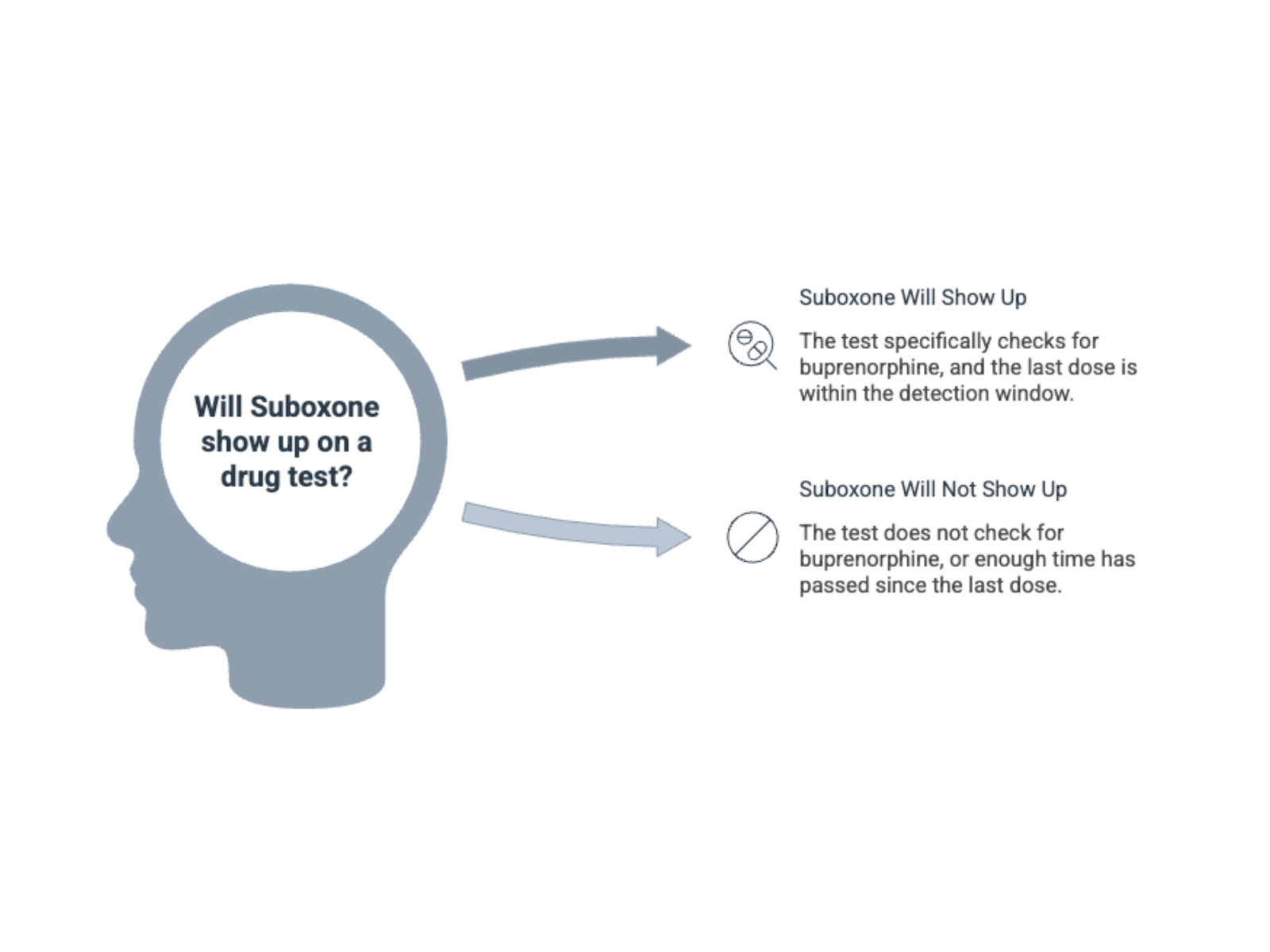
Most workplace drug screens do not include buprenorphine. Employers typically use standard testing panels because they are faster and less expensive, and those panels are designed to detect commonly misused or illicit substances rather than prescribed medications. Treatment programs, courts, probation departments, and certain medical settings operate differently. In those environments, buprenorphine testing may be included intentionally to confirm medication adherence or monitor compliance with treatment plans.
When people ask whether Suboxone shows up on a urine drug test, the answer depends entirely on what the laboratory is screening for. Suboxone will appear if the test specifically includes buprenorphine. If buprenorphine is not part of the testing panel, Suboxone will not be detected.
Suboxone will appear on a urine test when three conditions are met: the laboratory specifically screens for buprenorphine, the individual has taken Suboxone, and the last dose falls within the detection window. When those factors align, the result will read positive for buprenorphine. This is distinct from testing positive for heroin, fentanyl, oxycodone, or other opioids.
Suboxone does not appear on a standard 5 panel or 10 panel drug screen unless buprenorphine is specifically included. It will also not be detected if the test does not include a buprenorphine assay or if enough time has passed since the last dose for the drug to clear the body. Many people worry about results without realizing that buprenorphine was never part of the testing panel. Understanding how testing works can prevent unnecessary anxiety.
Different types of drug tests detect buprenorphine for different lengths of time depending on the biological sample used, such as urine, blood, saliva, or hair.
Urine testing is the most commonly used method in employment, court settings, and treatment programs. When buprenorphine screening is included, urine tests can detect Suboxone for several days after the last dose. Because urine analysis is the most frequent testing method people encounter, it is also the source of most questions about detection.
Blood tests typically detect buprenorphine for a shorter window than urine tests and are more commonly used in hospitals or emergency settings rather than workplaces. Saliva tests generally identify recent use within one to two days. Hair testing can detect buprenorphine for up to ninety days, although this method is less common in employment settings and more often used in legal or custody cases.
False positives for buprenorphine are uncommon. When confusion arises, it is usually due to misunderstanding rather than laboratory error. A positive buprenorphine result is legitimate if the individual has a valid prescription for Suboxone. Most issues are resolved through proper documentation and verification.
Many people want to know how long they may test positive after stopping Suboxone. For most individuals, buprenorphine remains detectable in urine for approximately three to seven days, though longer detection is possible with higher doses or long term use. Individual factors such as metabolism, body composition, and duration of treatment all influence the exact timeframe.
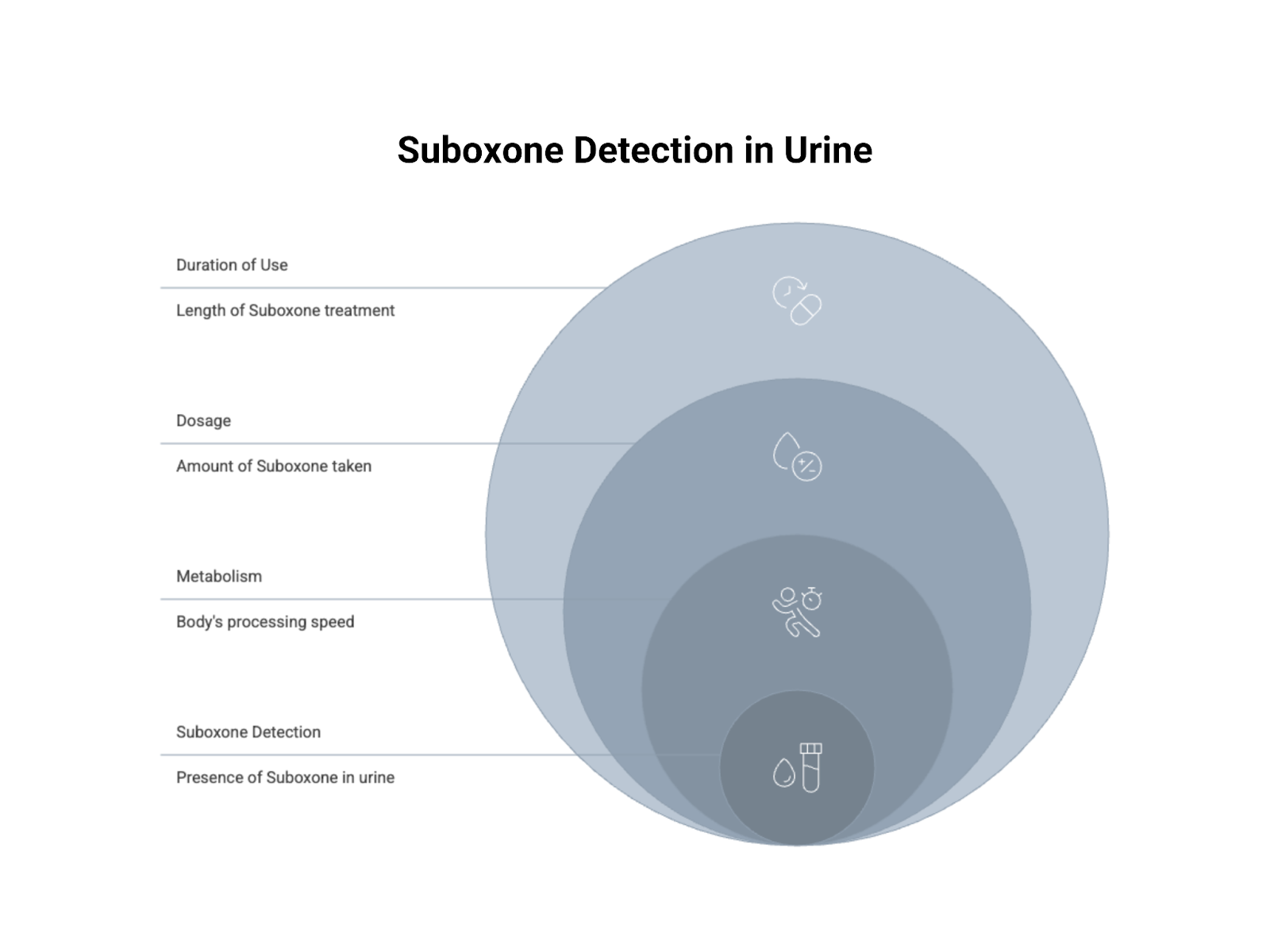
For most people, Suboxone can be detected in urine for approximately three to seven days after the last dose, although some individuals may test positive for up to ten days, particularly after long term use.
Detection windows vary from person to person. Higher doses tend to remain in the body longer, and daily use over months or years can extend how long buprenorphine is detectable. Metabolism also plays a role, as individuals with slower metabolic rates may test positive longer than those who metabolize medications more quickly.
Drug testing can feel more complicated when employment or legal matters are involved. In most cases, standard drug panels do not include buprenorphine unless specifically requested. If a person has a valid prescription, a positive buprenorphine result should not automatically disqualify them from employment. Some individuals choose to disclose their prescription in advance, while others wait until results are returned. Both approaches are common, and the appropriate choice often depends on personal comfort and workplace policies.
In probation or court monitored settings, many jurisdictions allow Suboxone when it is prescribed by a licensed physician. However, rules vary, and some courts require documentation of active treatment. Failing to disclose prescribed medication can create avoidable complications, even though the medication itself is legal. If buprenorphine is detected, verification is typically requested. This may involve pharmacy records, a physician’s letter, or formal treatment documentation. Once confirmed, the result is usually cleared.
It is possible to fail a drug test while taking Suboxone, but only under specific circumstances. A positive buprenorphine result simply indicates that the medication was detected and does not imply illegal drug use. When supported by a valid prescription, the result is legitimate. False positives for Suboxone are uncommon. Issues generally arise from misunderstandings rather than laboratory error, and proper documentation typically resolves them. If Suboxone appears on a drug test, remain calm, provide proof of prescription, confirm who will verify the result, and retain copies of your medical documentation. Most concerns are resolved once records are reviewed.
Some individuals taper off Suboxone and worry about both withdrawal symptoms and how testing may be affected. Withdrawal symptoms usually begin within twenty four to forty eight hours after the last dose. For most people, symptoms last one to two weeks, though mild effects may persist longer. Early withdrawal may involve anxiety, sweating, restlessness, and muscle aches. During peak withdrawal, fatigue, nausea, and sleep disruption often intensify. In later stages, low energy, mood fluctuations, and lingering cravings can occur. Medical supervision can make this process more manageable.
Stopping Suboxone abruptly can lead to significant physical and emotional distress and increases the risk of relapse. A gradual taper under medical supervision is safer, with dose reductions spread over weeks or months to reduce symptom severity and improve long term outcomes. Medical attention is necessary if severe vomiting, dehydration, extreme anxiety or depression, or thoughts of self harm occur. Withdrawal should not be managed alone.
Most medication assisted treatment programs include regular drug testing. This is not intended as punishment but as a clinical tool that allows providers to monitor progress, adjust treatment, and identify relapse risk early. Consistent monitoring supports medication adherence, reduces overdose risk, and strengthens accountability between patient and provider.
Drug testing does not have to be confusing when you understand how it works. Suboxone appears only on tests that specifically screen for buprenorphine, and standard drug panels typically do not detect it. In urine, it is usually detectable for three to seven days, while hair testing can detect use for a much longer period. If you are uncertain about workplace testing policies, consider speaking with your employer or human resources department. Always consult your doctor before tapering or discontinuing Suboxone, and keep documentation organized if you are subject to legal monitoring. Recovery is supported by accurate information, consistent medical care, and open communication. Staying engaged with your treatment team, keeping records, and asking questions all strengthen long term stability and success.
Lorem ipsum dolor sit amet consectetur adipiscing eli mattis sit phasellus mollis sit aliquam sit nullam neque ultrices.
.png)