.png)

Addiction treatment has expanded into the digital space, making it possible to receive care without leaving home. Online rehab programs now offer therapy, group sessions, and medical support through secure video platforms, providing structured treatment in a more flexible setting. For many people, this model works well, though it is not the right fit for everyone.
This guide explains how online rehab programs operate, outlines who tends to benefit most from virtual care, and helps you understand how to choose a program that matches your needs.
Online rehab delivers structured addiction treatment through secure digital platforms. You meet with licensed counselors and medical providers by video, participate in group therapy from home, and access educational materials directly from your phone or computer. The treatment itself is real, the professional credentials still matter, and for many people the outcomes can be comparable to in person care when the program is properly designed and supervised.
Online rehab has expanded access to treatment by removing many of the barriers that once kept people from getting help. You may not need to take extended time off work, arrange travel, or explain your absence to others, because care is delivered directly to you through secure virtual platforms. This flexibility is especially important for people balancing jobs, parenting responsibilities, or living in areas where local treatment options are limited.
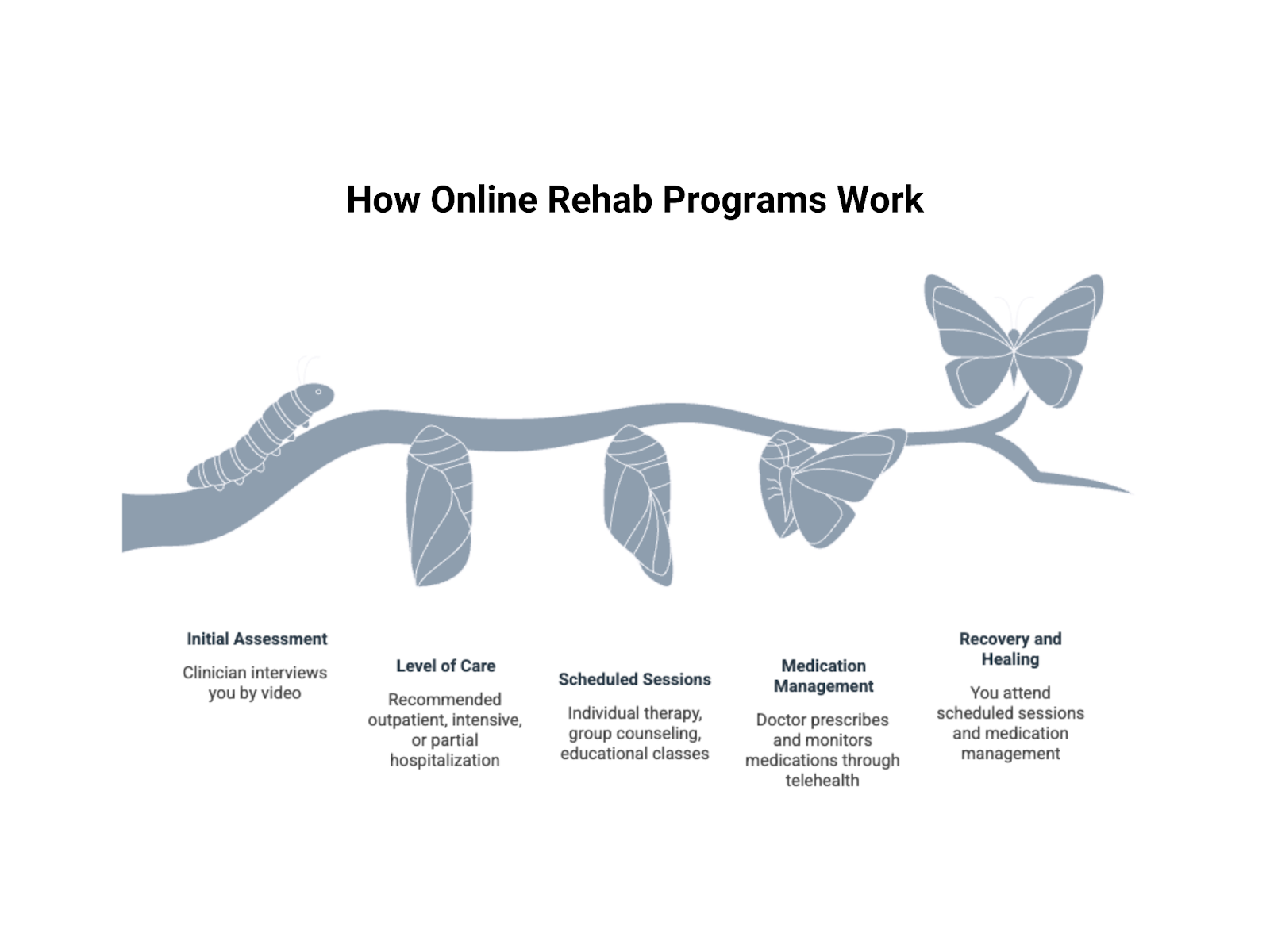
Online rehab typically begins with a comprehensive assessment conducted by video. A clinician asks about your substance use history, mental health, and medical background before recommending an appropriate level of care, such as standard outpatient treatment, intensive outpatient, or partial hospitalization.
From there, you attend scheduled virtual sessions that may include individual therapy, group counseling, and educational classes. Many programs also offer medication management, with a physician prescribing and monitoring treatment through secure telehealth visits to ensure safety and effectiveness.
Online rehab is not one size fits all. Programs vary in structure and intensity, and the level of care you need depends on your specific situation, including the severity of substance use, your mental and physical health, and the stability of your home environment.
Outpatient rehab involves the least time commitment, with sessions typically scheduled for just a few hours each week while you continue living at home and maintaining your normal routine. This level of care is often appropriate for individuals with mild to moderate substance use disorders and for those who have a stable home environment with strong support systems in place.
Online drug rehab programs treat a wide range of substance use disorders, including addiction to opioids, stimulants, benzodiazepines, and other drugs. Treatment typically includes evidence based approaches such as cognitive behavioral therapy, relapse prevention planning, and the development of practical coping skills. Many virtual programs also provide medication assisted treatment when appropriate. Physicians may prescribe buprenorphine for opioid use disorder and naltrexone for alcohol or opioid dependence, with ongoing monitoring conducted through telehealth visits to ensure safety and effectiveness.
Online alcohol rehab programs are designed to address a range of drinking problems, from early stage misuse to more severe alcohol use disorder. Treatment can vary from brief, structured interventions to more intensive programs that involve multiple sessions each week. These programs help you identify triggers, strengthen refusal skills, and address underlying conditions such as depression, anxiety, or trauma that may contribute to continued drinking. When appropriate, medical providers may also prescribe medications as part of treatment. Naltrexone can help reduce alcohol cravings, while acamprosate supports ongoing sobriety by helping stabilize brain chemistry after you stop drinking.
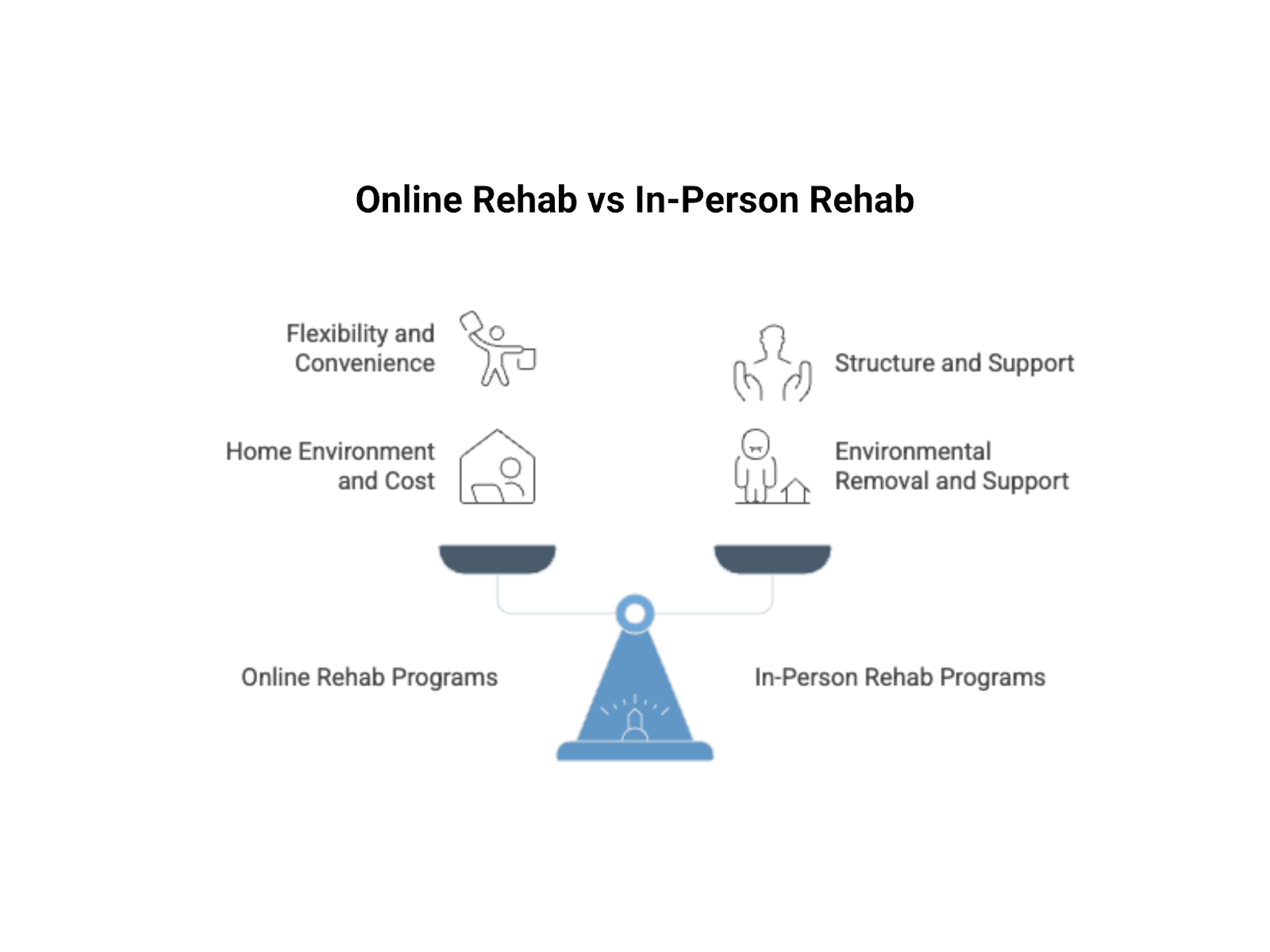
Online rehab allows you to continue working, remain with your family, and avoid the higher costs associated with residential treatment. For many people, that flexibility makes care more accessible and sustainable. In contrast, in person rehab removes you from your everyday environment, which can be especially helpful if your home setting contributes to substance use. Residential programs also provide 24 hour support and structure.
Both approaches can be effective. The right choice depends on the severity of your addiction, the stability of your living situation, and the level of support you need to recover safely.
Online platforms now offer multiple levels of treatment. You can step up or down as needed.
Standard outpatient care typically involves one to three sessions per week, with each session lasting about one to two hours. This level of treatment is often appropriate for individuals in early recovery who have already completed a higher level of care, as well as for those experiencing less severe substance use disorders who can maintain stability with a lighter structure.
Intensive outpatient programs require a greater time commitment, typically involving sessions three to five days per week that last two to three hours each. This level of care provides meaningful structure and accountability without removing you from your daily responsibilities. Many programs offer flexible scheduling, allowing you to work during the day and attend treatment sessions in the evening.
Partial hospitalization programs provide the highest level of outpatient care, with treatment typically scheduled five to six days per week for four to six hours each day. This level is often appropriate for individuals stepping down from inpatient treatment, as well as for those who need intensive clinical support but can remain safe and stable at home in the evenings.
You may thrive in an online rehab program if you have a mild to moderate substance use disorder that has not led to severe medical complications. A stable living environment is also important, especially if your home does not trigger or enable substance use. Reliable internet access and the ability to participate consistently without ongoing technical issues are essential for success in virtual care.
Online treatment tends to work well for individuals who can stay motivated independently and do not require constant in person supervision to remain accountable. It can also be a strong option for those with transportation or mobility challenges, as well as for people who need to continue working or caring for dependents and cannot step away for residential treatment.
Online rehab may not be appropriate if you have a severe addiction with medical complications that require supervised detox. Individuals at risk for withdrawal seizures or delirium tremens need in person medical monitoring. Serious mental health conditions, such as severe depression with suicidal thoughts or active psychosis, also require direct clinical care.
Additionally, if your home environment is unsafe or actively contributes to substance use, virtual treatment may not provide enough protection or structure. People who have tried outpatient care multiple times without success may benefit more from the intensive support and accountability offered in residential treatment.
Online rehab often works best when it is paired with local support. You may attend therapy and medical appointments virtually while participating in in person 12 step or peer support meetings in your community. Many people use online treatment for individual counseling and structured clinical care, then rely on face to face meetings for connection and accountability. This blended approach can provide professional guidance, consistent structure, and a sense of community, all of which strengthen long term recovery.
The process usually begins with a phone call or an online form. From there, a video assessment is scheduled, during which a clinician asks detailed questions about your substance use, medical history, mental health, and personal goals. They explain your treatment options and recommend a plan based on your needs. If you agree with the recommendation, you enroll in the program and receive login credentials along with a structured schedule outlining your sessions and next steps.
Individual therapy typically occurs weekly or more often, giving you time to address personal challenges and develop healthier coping strategies. Group therapy brings together people facing similar struggles, allowing you to share experiences and learn from others in a supportive environment. Educational sessions focus on helping you understand addiction, including how substances affect the brain, while also building practical relapse prevention skills.
Duration varies by program and need.
Many people step down through levels. Long-term recovery support may continue for months or years.
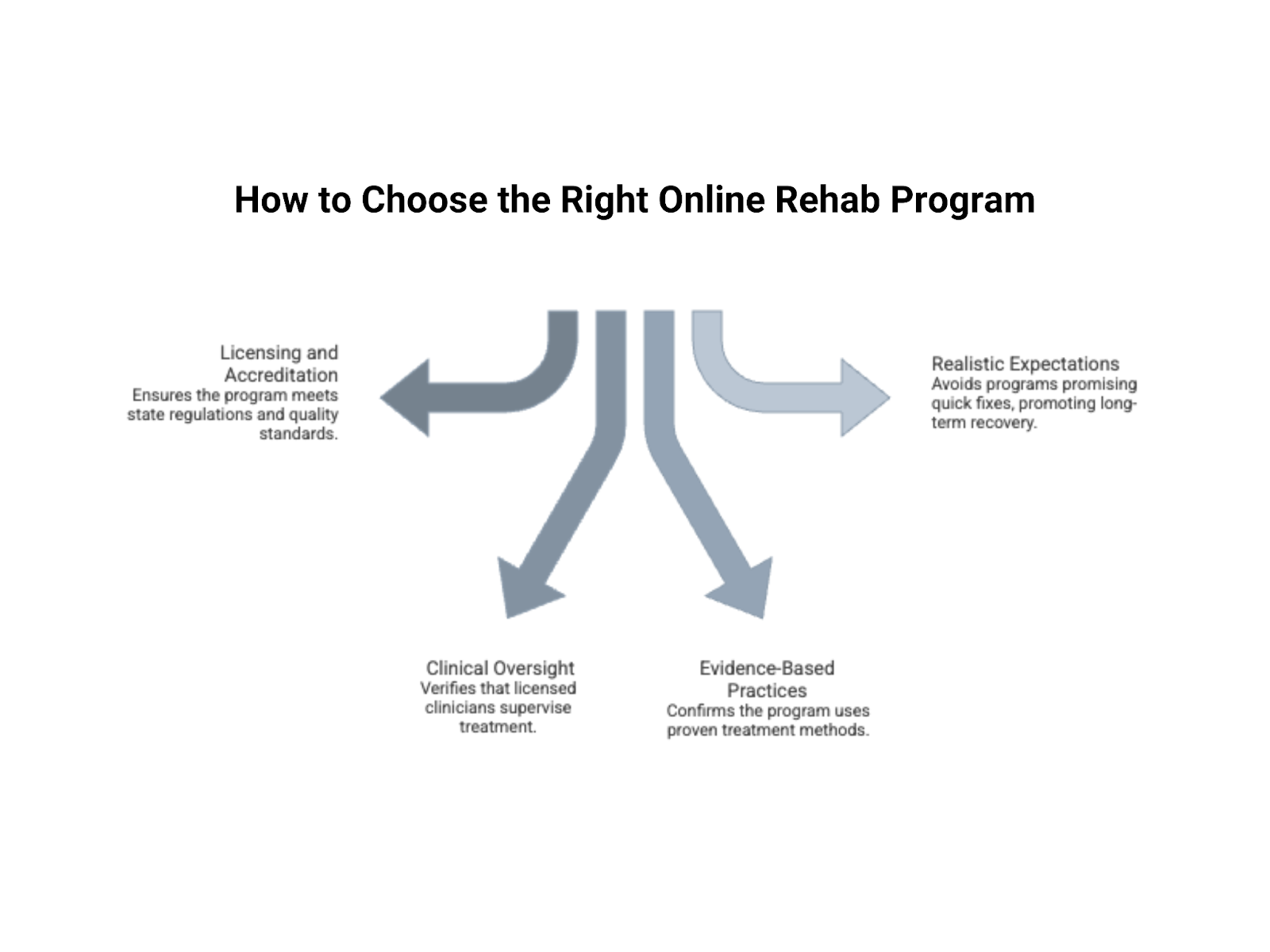
Watch out for warning signs.
Ask direct questions. Get clear answers.
Good programs welcome these questions. They provide transparent answers.
Location matters for online rehab. Providers must be licensed in your state.
Telehealth providers must be licensed in the state where you are physically located when receiving care. A therapist licensed only in California, for example, cannot legally treat you if you live in Texas. These rules are designed to protect patients and ensure that providers meet the professional standards set by your state. Some clinicians hold licenses in multiple states, while others are authorized to practice in only one. Before enrolling, confirm that the program can legally provide services in your location and that the provider treating you is properly licensed where you reside.
Telehealth laws vary from state to state. Some states allow broad access to virtual care, while others impose more restrictions on how and when services can be delivered. Most states now permit telehealth for addiction treatment, and many insurance plans cover it similarly to in person care. However, certain states still require an initial in person visit before ongoing virtual treatment can begin, while others allow care to be delivered entirely remotely. Because these regulations differ, it is important to verify the specific rules in your state before starting an online rehab program.
You can begin the process right now by searching for licensed programs in your state, reading reviews, and verifying credentials. Schedule assessments with two or three providers so you can compare their treatment approaches, confirm insurance coverage, and understand your costs upfront. Once you choose a program, complete enrollment and start treatment.
Recovery begins with a single decision to take action. Online rehab makes that first step more accessible, allowing you to seek help before things fall apart. You do not have to wait until you hit bottom. The treatment is legitimate, the support is real, and the possibility of recovery is within reach.
Lorem ipsum dolor sit amet consectetur adipiscing eli mattis sit phasellus mollis sit aliquam sit nullam neque ultrices.
.png)