.png)
Ketamine-related hospital admissions have increased by 45% over the past five years, with thousands of people now seeking treatment for what many initially believed was a "safer" party drug. The reality is far different. What makes ketamine tricky is the psychological hook - you feel incapable of handling life without it, even though quitting won't give you the brutal physical symptoms other drugs do. If you're caught up in ketamine use yourself or watching someone you love go deeper into addiction, getting a clear picture of what's happening is where recovery starts. This guide breaks down the warning signs to watch for, the real health dangers, and where to find treatment in West Palm Beach and surrounding areas.
Ketamine was introduced in the 1960s for putting people under during surgery. It shuts off your brain's pain and awareness signals, making you feel separate from your own body. While useful in medical settings, that exact sensation is what makes it addictive. The addiction isn't really physical. The dependence is psychological. Ketamine becomes your exit strategy from anxiety, depression, old wounds, or life constantly weighing you down. The relief works great in the beginning, but you keep needing larger amounts to recreate it. Your tolerance shoots up fast. Before you know it, you're stuck chasing something you can never quite catch again.
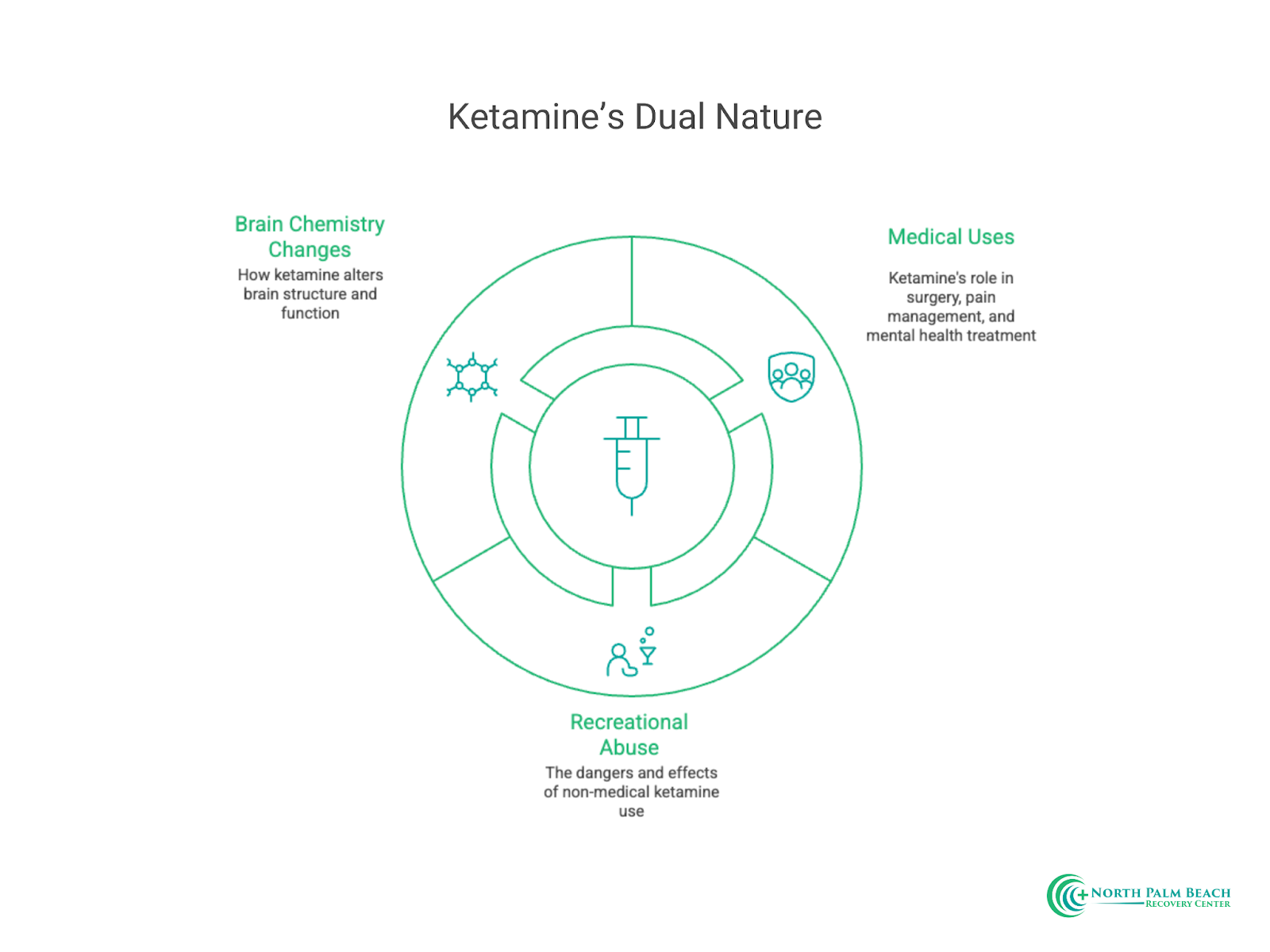
Ketamine knocks patients out for surgeries and manages pain in ERs. Lately, doctors have been giving tiny, carefully measured doses to people with really bad depression or PTSD after everything else has failed. Medical ketamine is different though - it's pharmacy-supplied with exact dosing, and healthcare professionals are monitoring you the entire time.
Outside medical settings, people use ketamine for the high and that out-of-body feeling. Most snort it, though some inject it. You might feel floaty and detached, or you might end up in a "K-hole" where you literally can't move or speak. The scary part? You have no idea what you're actually getting. That powder could be cut with anything, and the strength changes batch to batch.
Ketamine interferes with normal brain cell communication. It impacts the regions that control awareness, perception, memory, and emotions. Use it long enough, and your brain structure literally changes. It starts depending on ketamine to manage stress and mood. That's why quitting on your own feels nearly impossible.
Catching this early makes a huge difference. The changes usually creep up slowly as casual use becomes something you can't live without. Often, friends and family spot it before the person using does.
Someone addicted to ketamine starts drifting away from everything that mattered. They stop showing up for work or skip classes. Hobbies they loved? Don't care anymore. They avoid friends and family. Money becomes tight because so much goes toward the drug. They'll drive high or use in obviously dangerous situations. When they try to quit, they just can't stick with it.
The bladder damage is the worst. You start needing to pee constantly, and it's painful. Sometimes there's blood. The worst situations lead to complete bladder removal. You'll also notice: persistent stomach pain, losing weight you didn't mean to, stumbling around, exhaustion that never lifts, and hygiene going out the window. If they're snorting, nosebleeds become pretty regular.
Memory becomes unreliable. You forget conversations or what happened yesterday. Concentrating becomes a lost cause. Depression gets darker, anxiety climbs higher, and you reach for more ketamine to quiet those feelings, creating a worse cycle. Paranoia hits some people, or their emotions swing from extreme to extreme. The cravings take over until getting and using ketamine is all you think about.
Many believe that because of its chemical composition, ketamine is safer than other illicit substances. This belief is wrong. Long-term ketamine use will cause harm that may be long-lasting, and potentially irreversible.
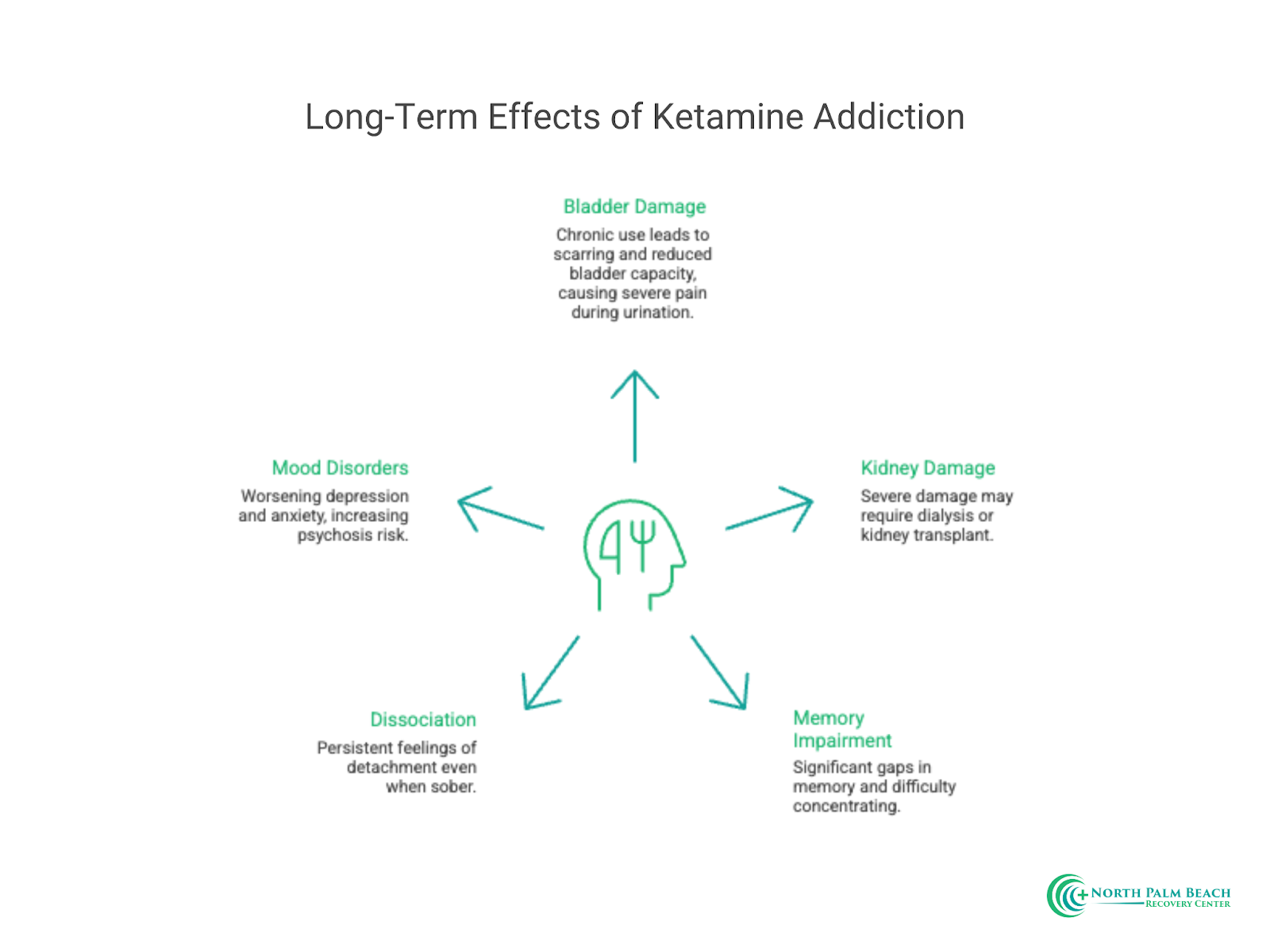
Your bladder lining gets damaged by chronic use of ketamine; it becomes scarred and shrunk so much that you might only have enough room for a shot glass full of urine. Most people report that the amount of pain they feel while urinating is unbearable and feels like urinating through broken glass.
In extreme cases, surgeons may need to remove their bladder entirely. Your kidneys also become severely damaged. Some people require dialysis and/or a kidney transplant due to being completely unable to function properly without medical intervention.
Long-term abuse impairs the manner in which your brain operates. Your memory has large gaps in it. Your ability to focus and maintain concentration is affected. Months and years may pass before you begin to recover from cognitive impairments caused by heavy ketamine use. Additionally, dissociative feelings are present even though you are sober. These feelings can be very frightening to individuals.
Depression usually gets worse with ketamine, which is ironic since people often start using it to feel better. Anxiety goes into a tailspin. Certain people experience full psychotic breaks with hallucinations or severe paranoia. Suicidal thinking becomes far more frequent, especially if other mental health problems are in the mix.
Unlike alcohol withdrawal which can actually kill you, ketamine withdrawal won't. But the psychological stuff hits hard enough that most people need professional help to get through it and not relapse.
The mental part hits hardest. Intense cravings that feel impossible to ignore. Overwhelming anxiety. Irritability with everyone. Heavy depression. Sleep turns into hell with intense, weird dreams that first week. You could feel completely numb inside or swing wildly between emotions. Physical stuff includes being wiped out, eating way more, trembling, and heart pounding.
You'll start feeling symptoms within a day or two after stopping. The roughest stretch goes on for one to two weeks. The mental stuff though, like cravings and mood swings, can stick around for months as your brain fixes itself. Timeline really depends on your usage amount, frequency, and if you're dealing with other mental health problems.
Having professionals there changes everything. Medical staff keep tabs on your symptoms, give you meds for anxiety and insomnia, and stay alert for signs of serious depression or suicidal thoughts. A structured program also puts physical distance between you and ketamine during those first awful days when cravings hit hardest.
Recovery from ketamine addiction goes beyond detox. Understanding your reasons for starting and creating better coping mechanisms is essential. What treatment looks like depends on how severe your addiction is.
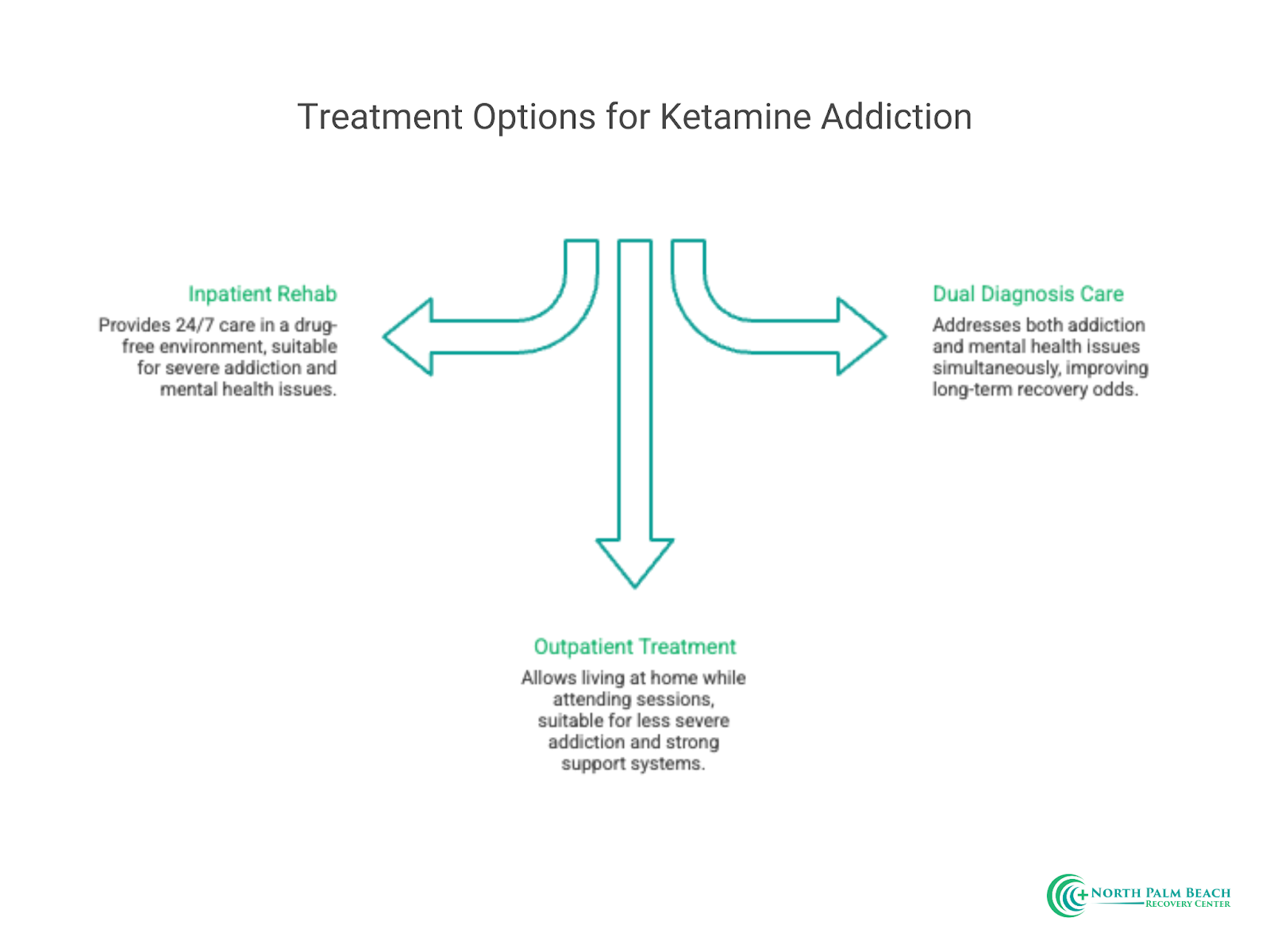
Inpatient rehab means living at the treatment center for 30 to 90 days or more. You get 24/7 care in an environment that's totally drug-free. This route makes sense when your addiction is bad, you've got serious mental health stuff going on, your home situation isn't safe, or outpatient already failed.
Your days follow a schedule with one-on-one therapy, group meetings, and things like yoga or art therapy. The main therapies are cognitive behavioral therapy (changing those harmful thought patterns) and dialectical behavior therapy (handling tough emotions better).
Outpatient programs let you live at home while attending treatment sessions. Partial hospitalization (PHP) is most intensive at five to seven days weekly for four to six hours. Intensive outpatient (IOP) is three to five days for two to four hours. Standard outpatient is once or twice weekly. These options work when your addiction isn't too deep, you've got people at home supporting you, and you can avoid ketamine between appointments. You're able to keep working and take care of family stuff.
A lot of people battling ketamine addiction are also dealing with depression, anxiety, PTSD, or other mental health stuff. Dual diagnosis treatment goes after both problems at once. Your therapist shows you how your mental health issues and drug use keep making each other worse. Sometimes you'll need psychiatric meds on top of the addiction work. Addressing it all together gives you way better odds of staying clean for good.
Figuring out when to get help can be tough, but waiting makes damage worse. Some warning signs mean it's time to reach out now.
Using every day or several times a week is a huge warning sign. Bad bladder problems, severe depression, suicide talk, significant weight drop, ignoring hygiene, or constantly getting fired are just as concerning. Watch for: taking cash for ketamine, getting behind the wheel intoxicated, combining it with other substances, or blowing up when someone addresses it.
North Palm Beach Recovery Center in West Palm Beach provides full ketamine addiction treatment with therapies that actually work and care that's tailored to you.
We start with a thorough assessment where our master-level clinicians talk with you about your drug use, physical and mental health, and personal situation. We then build a treatment plan designed specifically for you. Your options include intensive outpatient, partial hospitalization, and regular outpatient treatment. The therapy side covers cognitive behavioral therapy, dialectical behavior therapy, acceptance and commitment therapy, EMDR for working through trauma, and relapse prevention built on 12-step principles.
We also tackle your physical health, what you're eating, and fixing things with your family.
Making that call takes guts. Everything about our admissions is kept completely private. Reach out to North Palm Beach Recovery Center at (561) 463-8867 to talk with our team. We accept most insurance plans and can check your coverage right away. Our staff will tackle your questions, explain what's possible, and get your assessment on the calendar. Ready to take that first recovery step? We're here with you through everything. You don't have to do this on your own.
Lorem ipsum dolor sit amet consectetur adipiscing eli mattis sit phasellus mollis sit aliquam sit nullam neque ultrices.
.png)