.png)

Depression has a way of creeping into everything. Work slips. Relationships get harder. Basic tasks start to feel like too much. For some people, seeing a therapist once a week helps. For others, it's just not enough to get stable. IOP gives you consistent support several days a week without pulling you out of your life completely. You still sleep at home, keep your routines, stay connected to the people around you. If your symptoms have been getting worse or you're struggling to get through the day, more structure might be what actually moves the needle.
If once-a-week therapy hasn't been enough but checking into a facility feels like more than you need, an Intensive Outpatient Program might be worth considering. With IOP, you come in several times a week, usually landing somewhere between 9 and 15 hours total. Sessions are a mix of group therapy, one-on-one counseling, psychiatric care, and practical tools for handling depression day to day. You go home after every session. People in IOP are juggling jobs, kids, school. The program is built around the fact that life keeps going. It fills the space between weekly therapy and inpatient care. Not too little, not too much.
Depression affects everyone differently. Some people continue functioning outwardly while struggling internally. Others may notice their symptoms beginning to interfere with daily life in more serious ways.
Signs that someone may benefit from IOP therapy for depression can include:
When depression starts affecting stability, relationships, or overall functioning, more structured treatment may provide additional support and direction.
IOP programs combine several forms of therapy and support into a structured weekly schedule. Treatment plans are individualized based on a person’s symptoms, mental health history, and treatment goals.
Group therapy is one of the core components of most IOP programs. These sessions allow individuals to connect with others facing similar mental health challenges in a supportive environment.
Group discussions may focus on:
For many people, group therapy also helps reduce feelings of isolation that often accompany depression.
Individual counseling gives clients the opportunity to work one-on-one with a therapist to address personal struggles, emotional patterns, and treatment goals.
Therapists may help individuals:
These sessions allow for more personalized support throughout treatment.
Some IOP programs include psychiatric care and medication management. Depression can sometimes involve symptoms that benefit from medication support alongside therapy.
Psychiatric providers may:
Medication decisions are individualized based on each person’s needs.
A major goal of IOP therapy is helping people develop practical coping tools they can use outside of treatment.
Clients may learn skills related to:
Because individuals continue living at home during treatment, they can begin applying these skills in real-life situations right away.
Most depression IOP programs use evidence-based therapies that focus on improving emotional health, thought patterns, and coping abilities.
Cognitive Behavioral Therapy, or CBT, is one of the most widely used therapies for depression treatment. CBT helps individuals recognize and challenge unhealthy thought patterns that may contribute to depressive symptoms. It also focuses on developing healthier behaviors, routines, and responses to stress.
Many people use CBT skills to:
Dialectical Behavior Therapy, or DBT, focuses heavily on emotional regulation and distress tolerance.
DBT may help individuals who experience:
These techniques can help people feel more grounded during periods of emotional difficulty.
Some individuals struggling with depression may also have a history of trauma. Trauma-informed therapy recognizes how past experiences can affect emotional health, relationships, and coping patterns. This approach focuses on creating a safe and supportive therapeutic environment while helping individuals process difficult experiences at a manageable pace.
Mindfulness-based techniques are often used to help individuals become more aware of their thoughts, emotions, and physical responses to stress.
Practices may include:
These tools can help individuals stay present and reduce emotional overwhelm.
One of the harder parts of getting help for depression is finding something that actually fits your life. IOP is built around that problem.
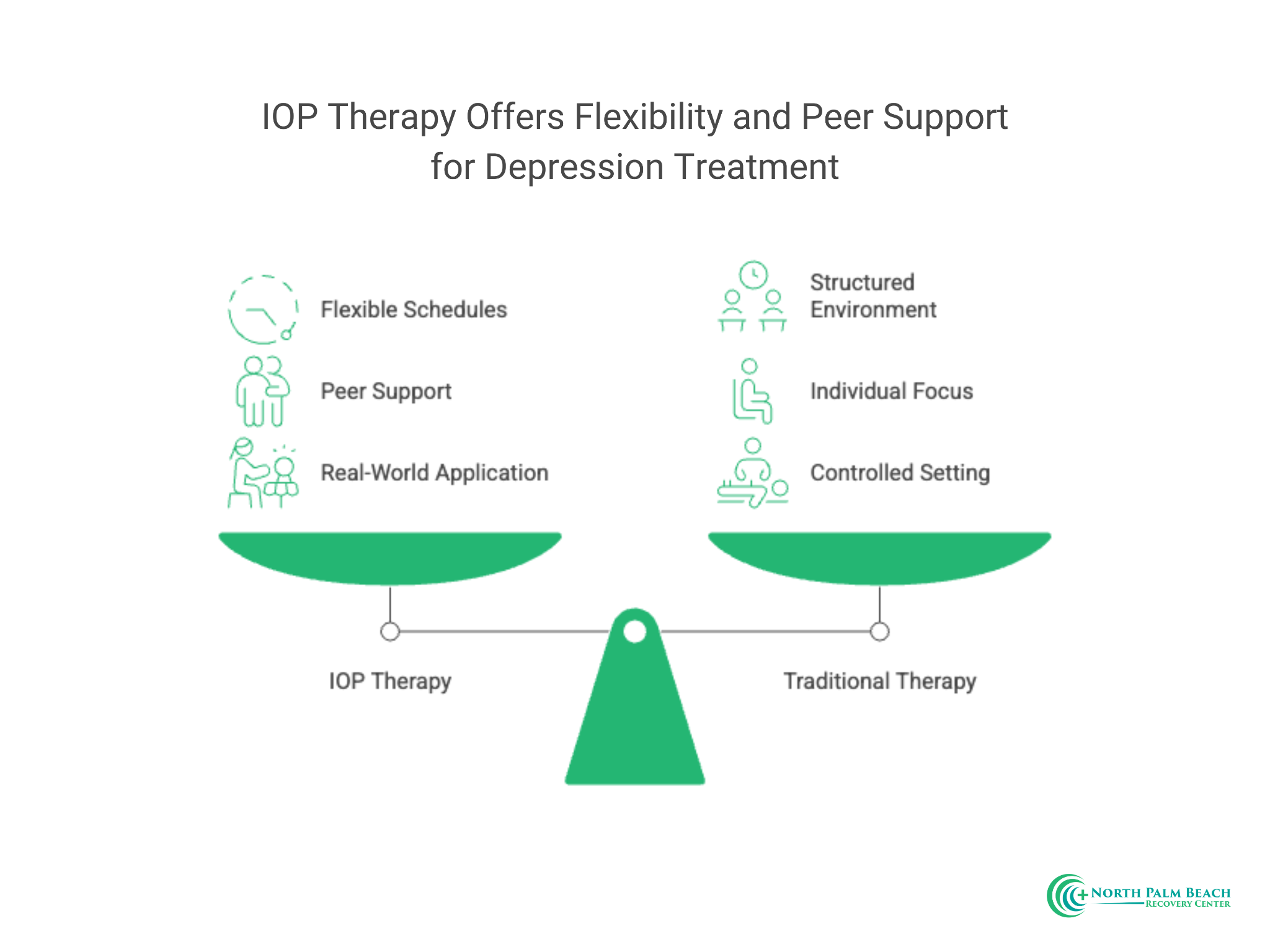
You get real, consistent support throughout the week without checking into a facility. Group sessions put you in a room with people going through something similar, which matters more than it sounds when depression has been making everything feel isolating. Most programs offer morning or evening schedules, so work, school, and parenting don't have to stop. And because you're still living your life between sessions, the skills you're building get tested right away, not just in a controlled setting.
Virtual IOP therapy has become an important option for many individuals seeking mental health treatment.
Online programs can improve accessibility for people who:
Virtual treatment may also provide additional privacy and comfort for individuals who feel anxious about attending in-person sessions. Many virtual IOP programs continue to offer structured therapy schedules, group sessions, individual counseling, and psychiatric support through secure telehealth platforms. For individuals in Florida, telehealth options may help increase consistency of care while making treatment more accessible across different communities.
IOP therapy for depression may benefit people who need more support than traditional therapy but do not require 24-hour supervision.
This level of care may be helpful for:
Every situation is different, which is why professional assessment is important when determining the appropriate level of care.
The length of an IOP program varies depending on a person’s symptoms, progress, and treatment needs. Many programs involve several therapy sessions per week over the course of a few weeks to several months. Some individuals attend treatment during the day, while others participate in evening programs that fit around work or school schedules. Treatment plans are typically adjusted throughout the recovery process based on progress and ongoing needs. As individuals improve, they may gradually transition to lower levels of care, such as weekly outpatient therapy or continued mental health support services.
Choosing the right treatment program can make a meaningful difference in the recovery process.
When researching depression IOP programs, it may help to look for:
A strong program should focus on treating the whole person rather than only addressing symptoms.
Depression doesn't look the same for everyone, and treatment shouldn't either. At North Palm Beach Recovery Center, our clinical team works with you to figure out what's actually going on and build a plan around that. We use therapy, structured support, and hands-on treatment planning to help you get to a better place, not just cope with where you are.
Ready to take the next step? Call us today to learn about your options or check your insurance coverage.
Lorem ipsum dolor sit amet consectetur adipiscing eli mattis sit phasellus mollis sit aliquam sit nullam neque ultrices.
.png)